

Spoons Complex,
Mahboula, Kuwait.
Spoons Complex,
Mahboula, Kuwait.
Spoons Complex,
Mahboula, Kuwait.
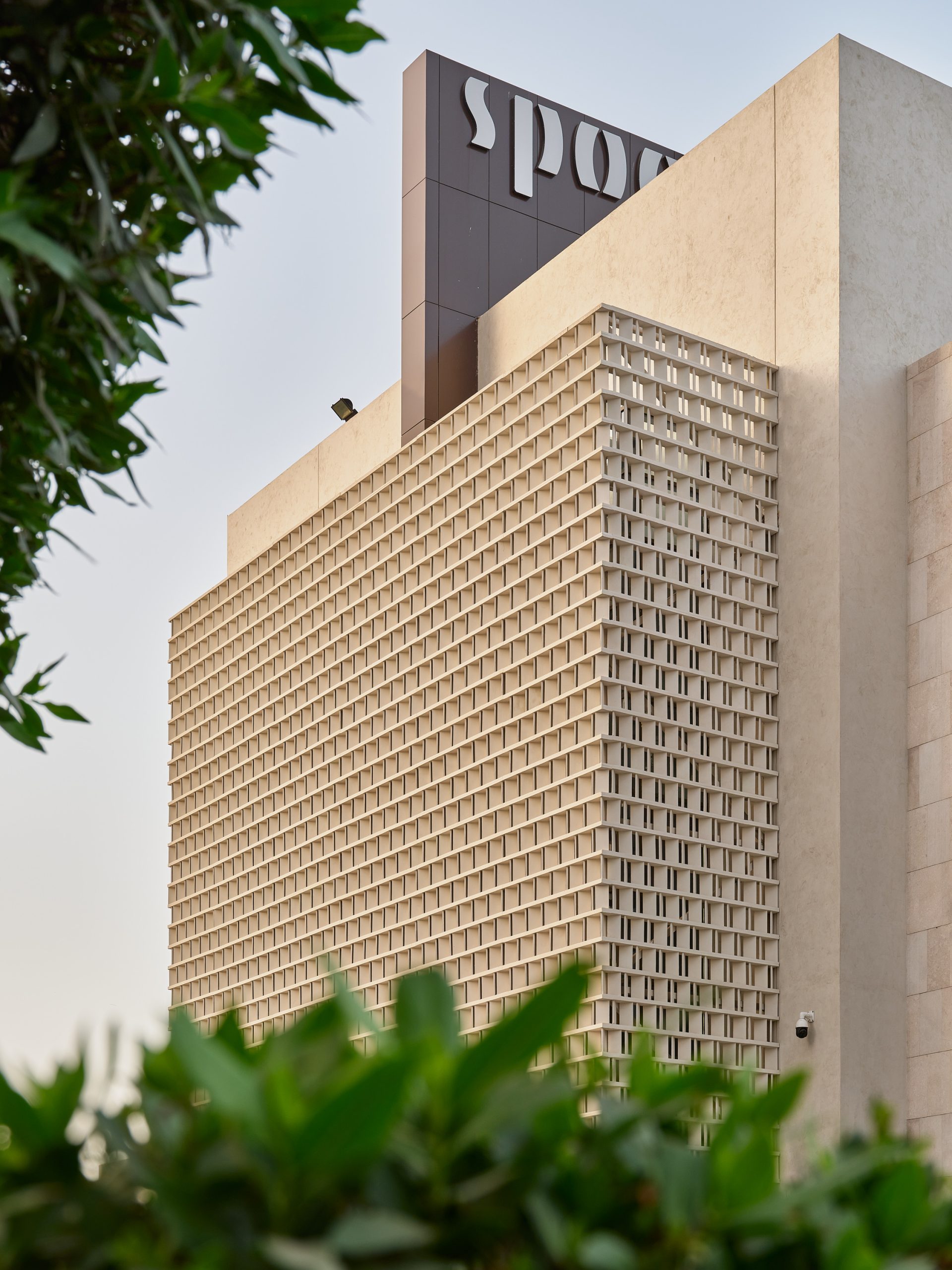
Spoons Complex is an architectural renovation of an existing restaurant destination in Kuwait, originally developed around 2009. The project was commissioned with the ambition of transforming the existing building into a vibrant F&B hub; one that attracts a younger, socially driven audience while remaining welcoming to families. The vision was to create more than just a collection of restaurants, but a place where people gather, spend time, and engage with the space as part of their daily social life.
The building had deteriorated over time, and the outdoor areas were fragmented and underutilized, defined by multiple inconsistent level changes that made the space difficult to navigate and disconnected from its surroundings. Rather than layering over these issues, our design approach began by rethinking the spatial structure entirely; prioritizing clarity, usability, and human experience.
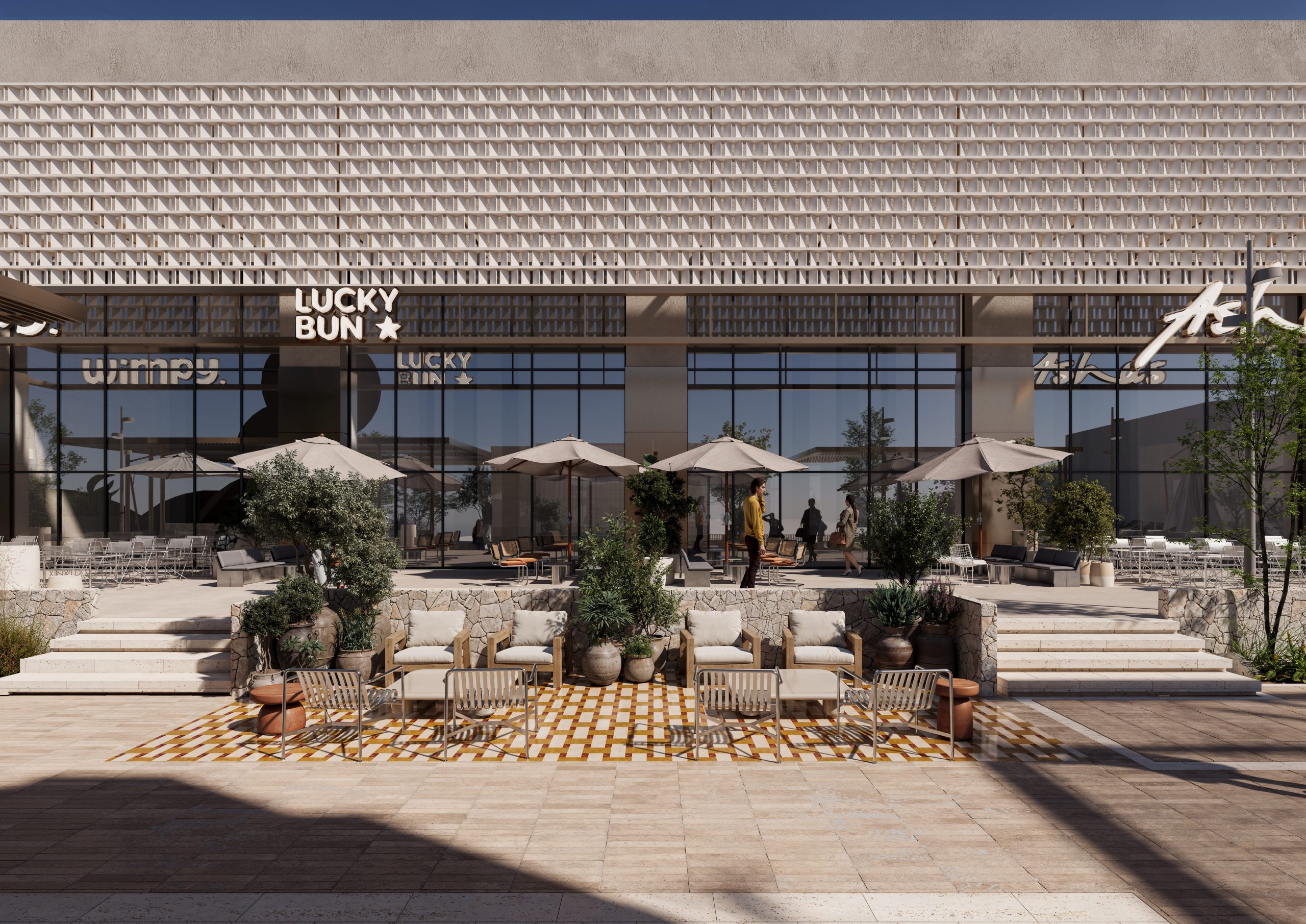
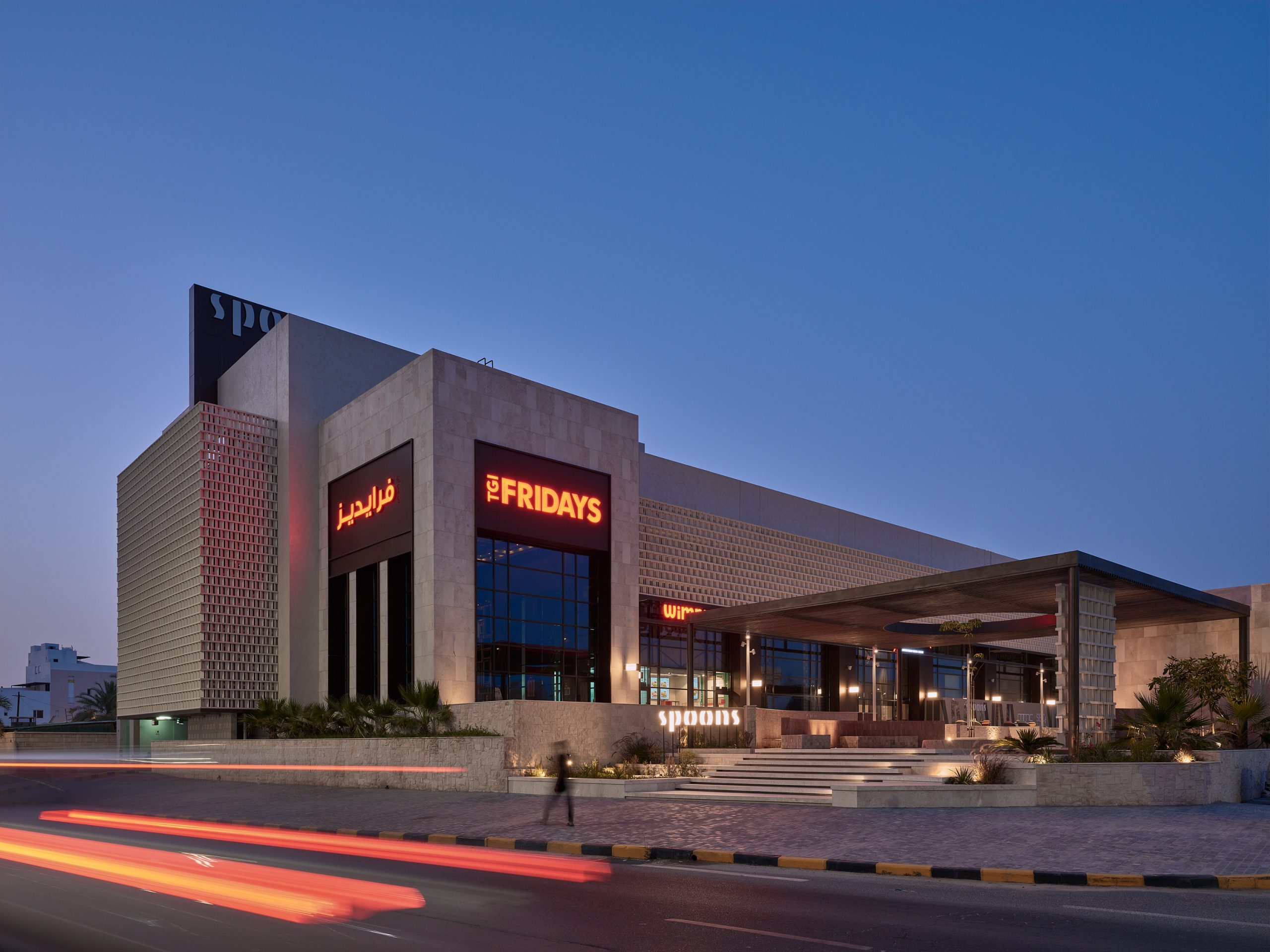
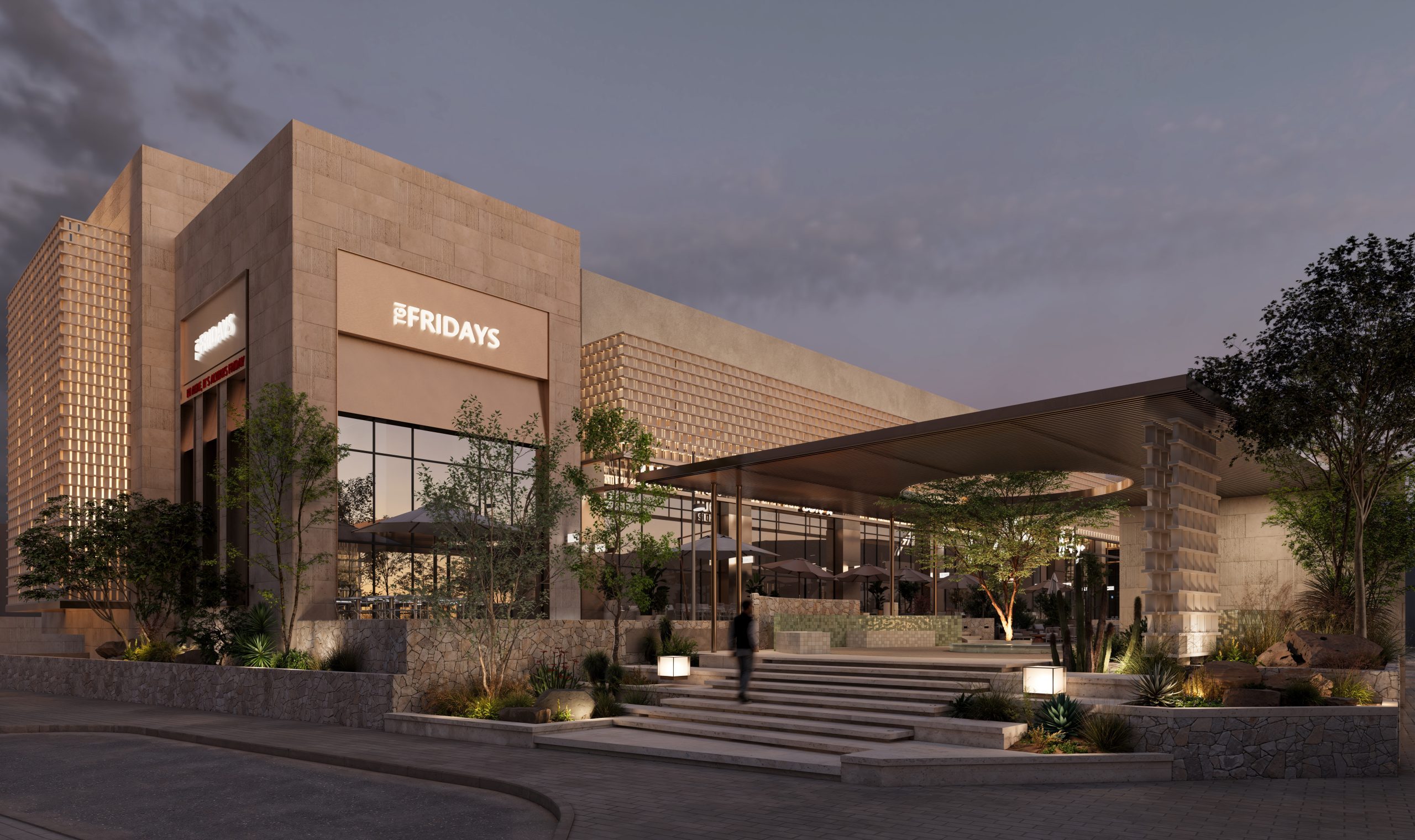
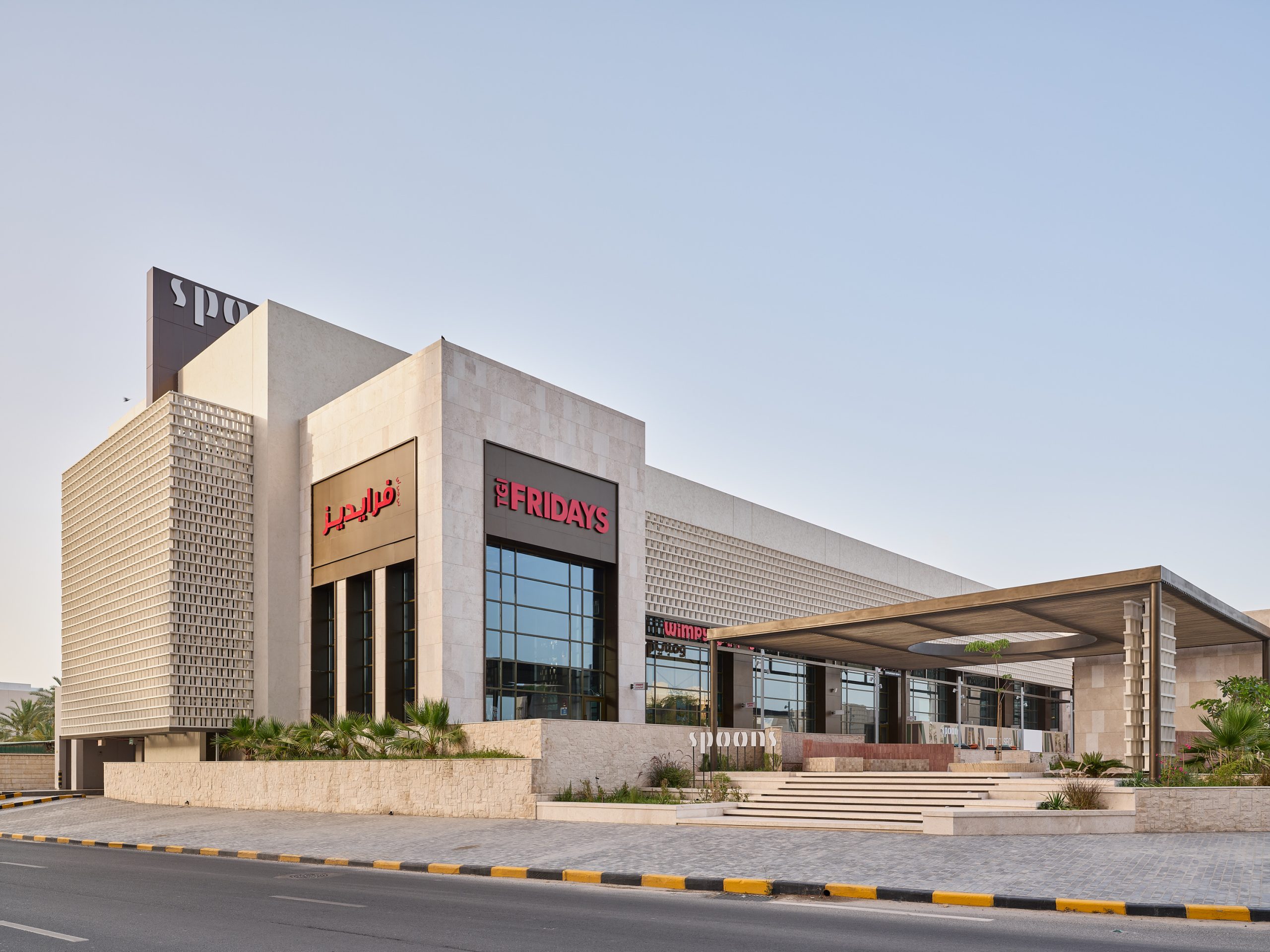
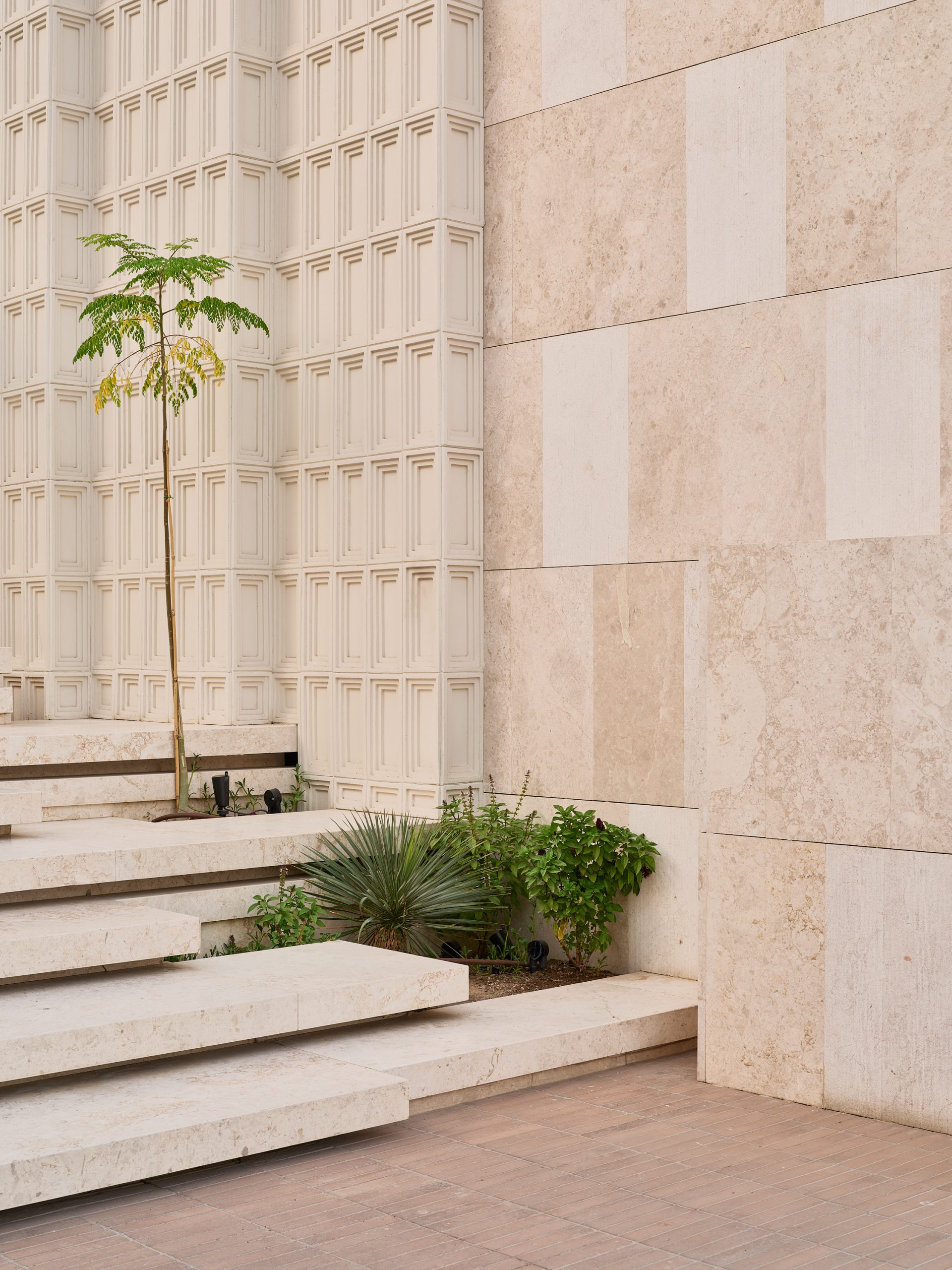
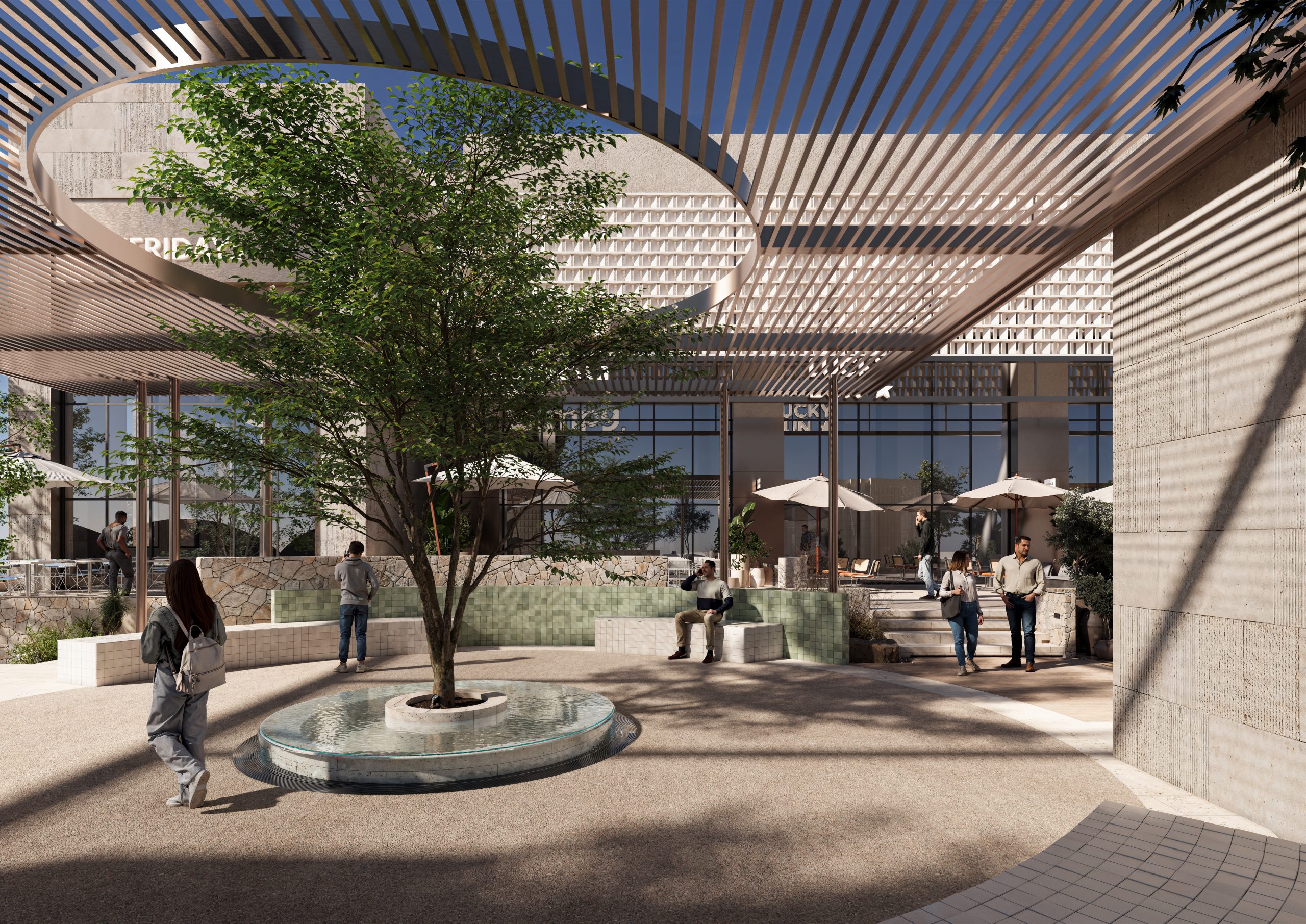
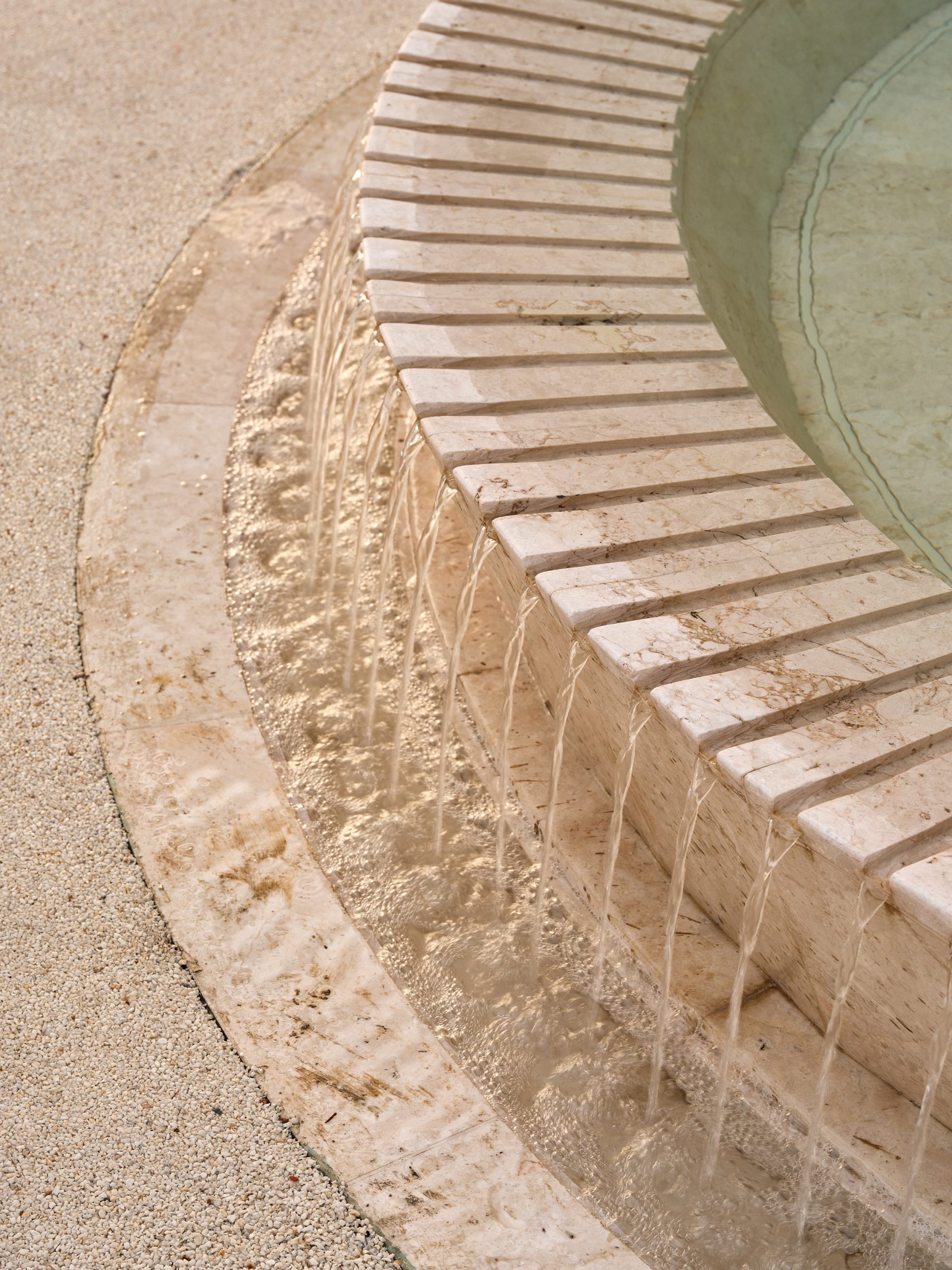
To begin with we wanted to resolve the the outdoor space and optimize it use; we created two different levels. We designed the lower level to act as an urban courtyard, integrating landscape, informal seating, and water features to create a relaxed social environment. The upper level aligns with the F&B units, forming a continuous outdoor dining terrace that connects directly to the rear parking for seamless access. A new entrance sequence reorients the project toward the main street, leading visitors through a shaded forecourt and grand staircase into a central gathering space anchored by water and seating elements. This moment acts as both a welcoming gesture and a social focal point.
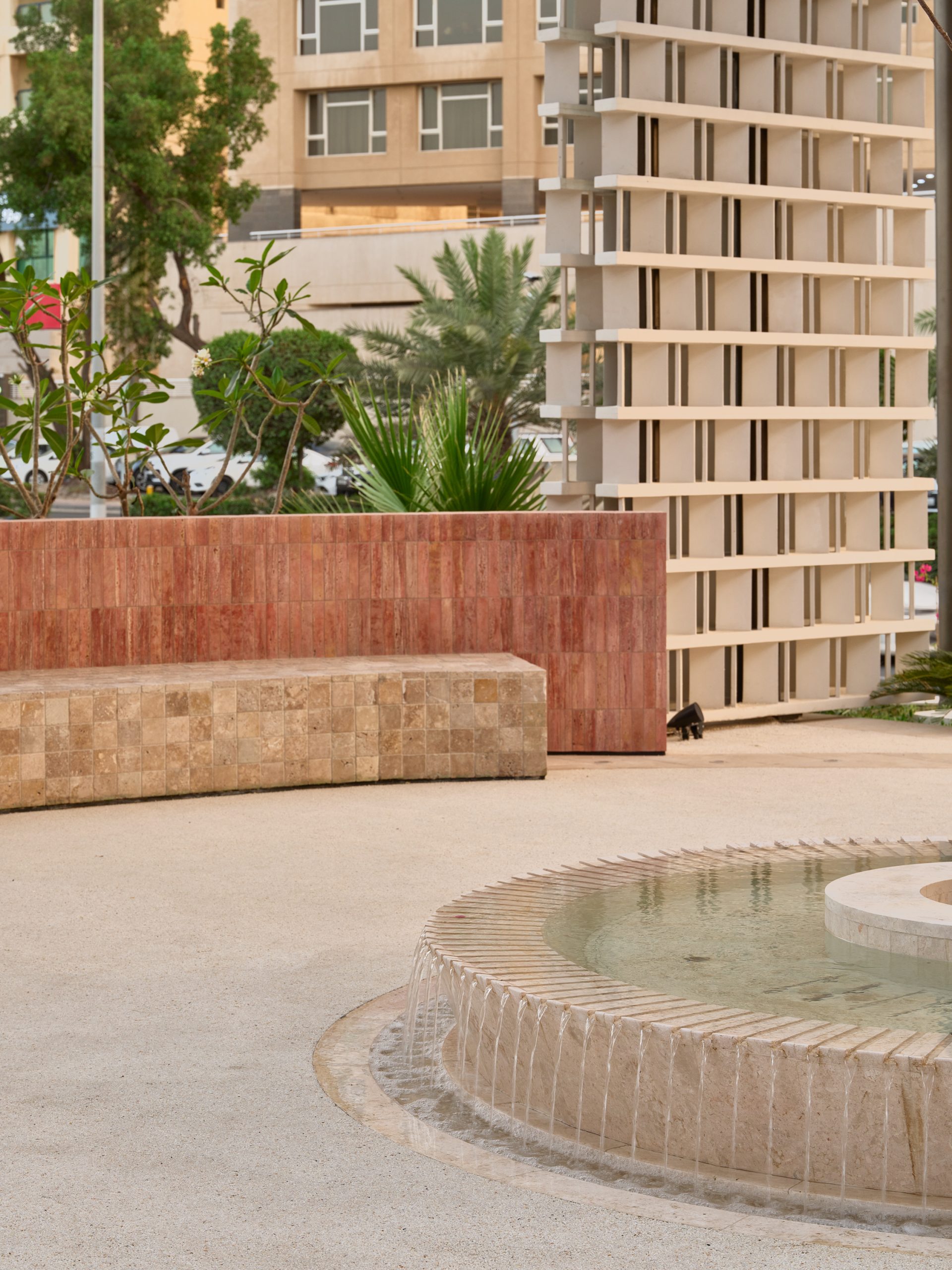
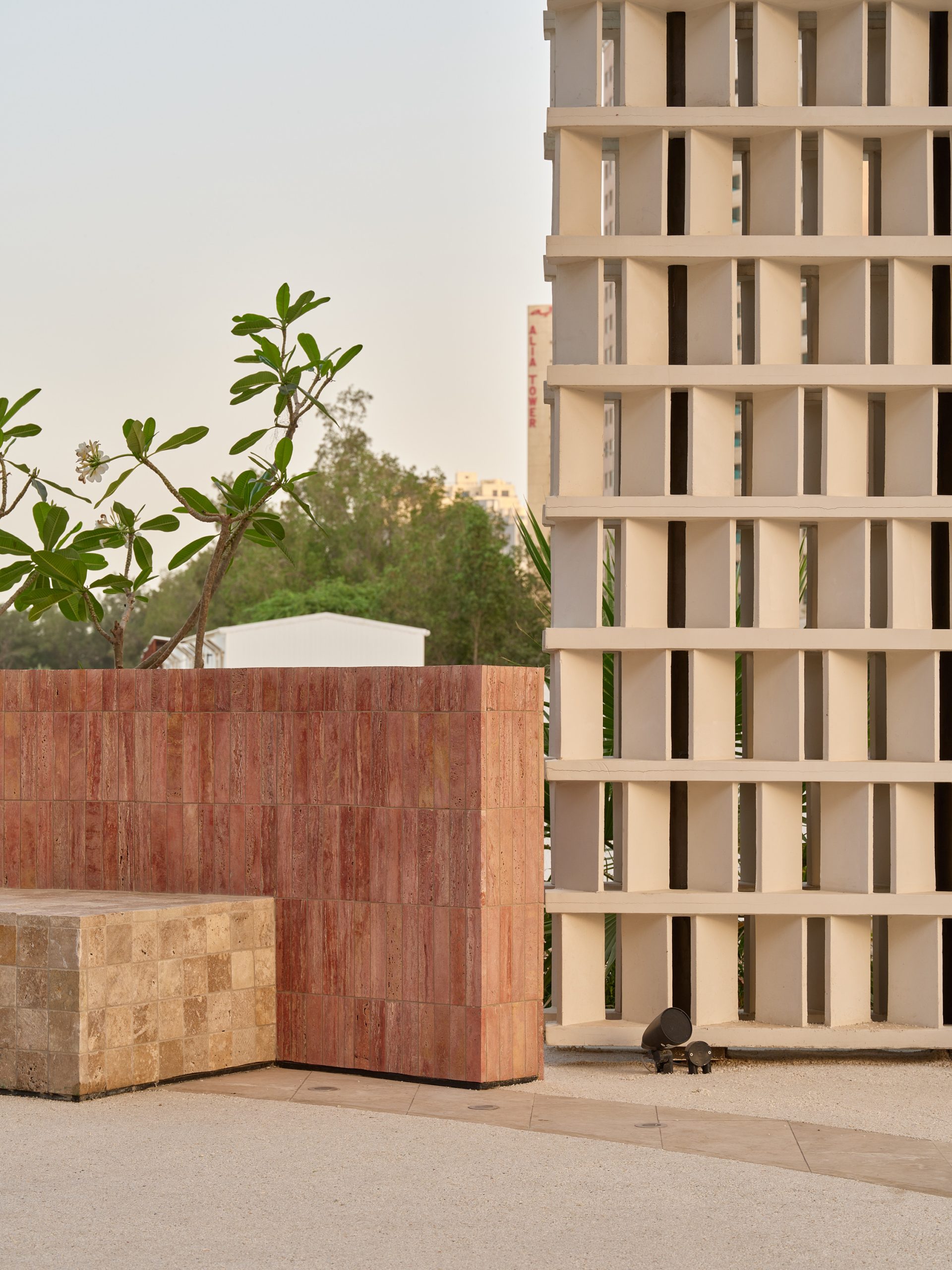
The architectural expression is unified through a custom GRC facade envelope applied over textured Omani stone cladding. This layered envelope provides depth and continuity across the elevation, while integrated lighting enhances the facade’s presence during evening hours & filters the natural light into the F&B units.
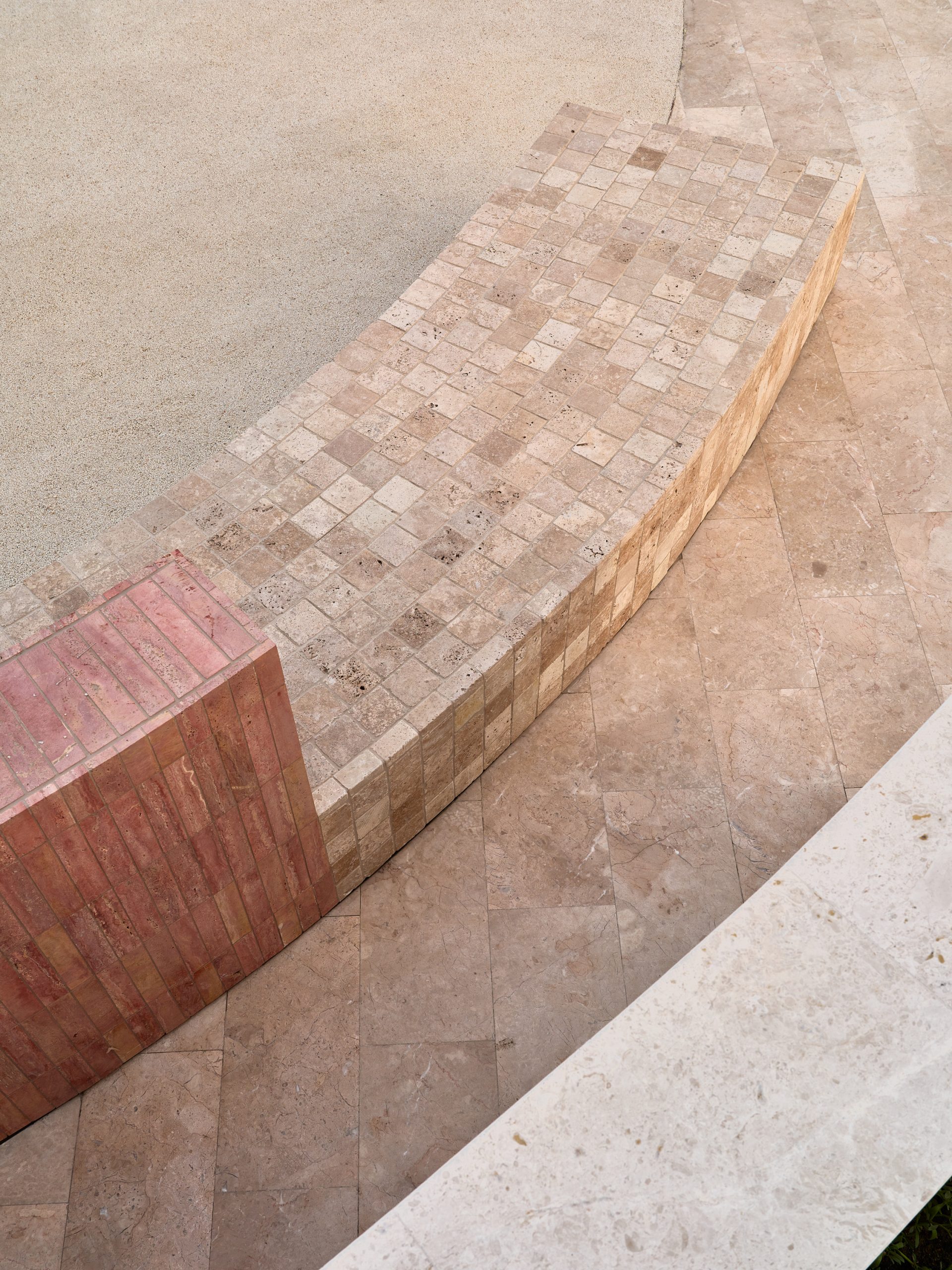
The project operates through a series of targeted interventions that recalibrate circulation, define outdoor space, and introduce a cohesive material language. The result is a reconfigured environment that shifts the complex from a residual commercial strip into a structured and active urban destination.